
How UK Small Businesses Get Burned by Web Hosting Renewal Prices and How to Avoid It
Sep 18, 2026·12 min read·eXact Digital
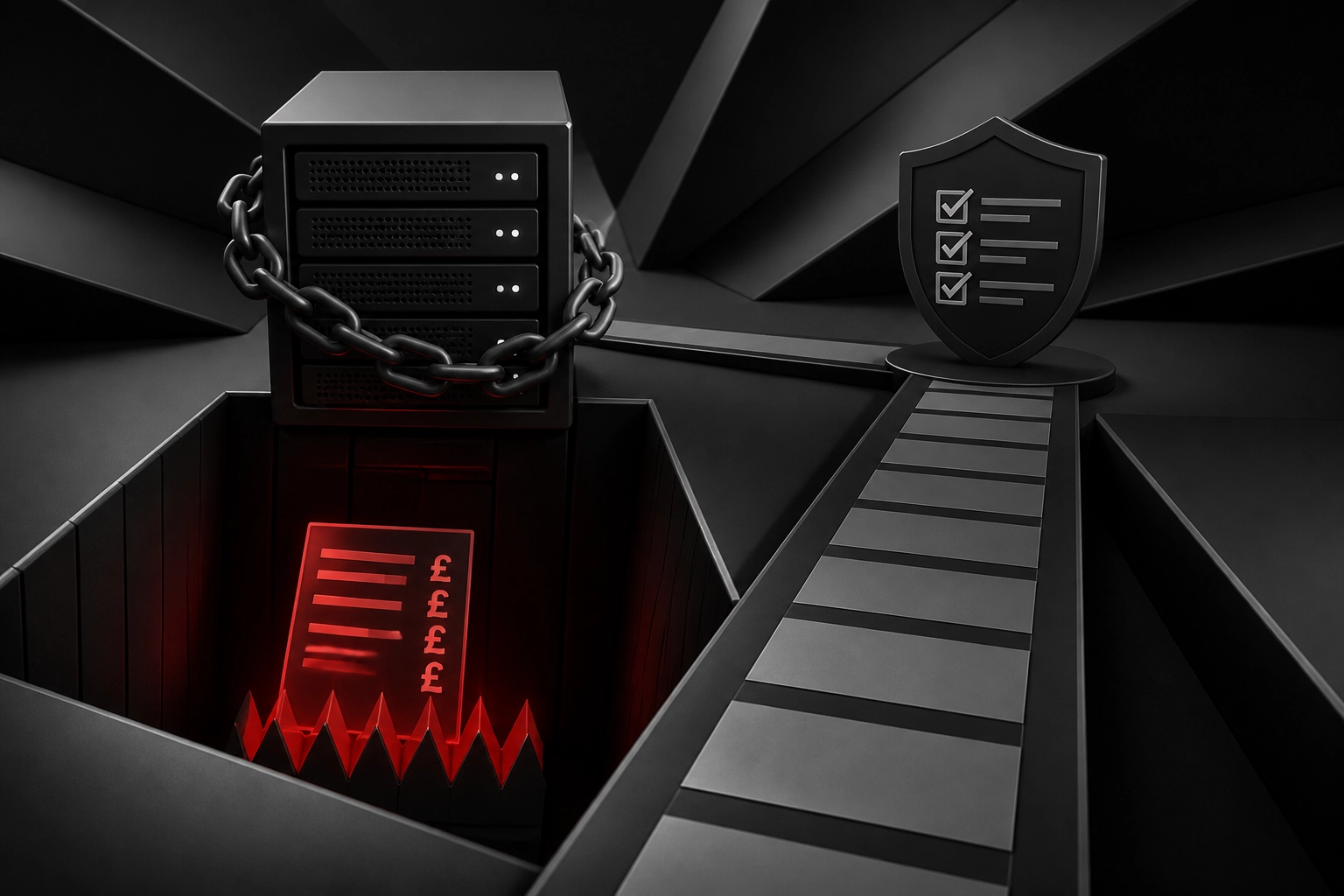
Choosing web hosting UK businesses can afford sounds straightforward until the renewal bill arrives. Thousands of small business owners sign up for hosting plans each year based on an attractive introductory price, only to discover that the cost can increase by 2–5 times when it is time to renew. It is one of the hosting industry's most persistent practices, and for businesses operating on tight margins, the financial surprise can be genuinely damaging.
This post breaks down exactly how renewal pricing works, why hosting providers structure their pricing this way, and what the true cost of hosting looks like once you account for SSL certificates, backup fees, and other charges that rarely appear in the headline figure. More importantly, it gives you a practical framework for evaluating any hosting plan before you commit, so you are never caught off guard again. You will also learn what transparent pricing actually looks like, with providers like Exact.gg demonstrating that honest renewal rates are possible, and how to switch providers cleanly if you are already paying over the odds.
The Renewal Bill That Catches Small Businesses Off Guard
You sign up for web hosting at around £2.99 per month. Twelve or twenty-four months later, an auto-renewal invoice arrives at a rate up to five times higher. No advance warning. No explanation. Just a charge well above what you originally agreed to pay.
This is not a billing error. It is the intended commercial model for most mass-market hosting providers operating in the UK.
The mechanics work like this: the price advertised at sign-up is a promotional introductory rate, a customer acquisition tool designed to win your business in a competitive market. The price charged at renewal is the standard rate, which is the provider's actual commercial price. These are two entirely different figures, and the gap between them is rarely placed anywhere a buyer would naturally look. It lives in the terms and conditions, typically behind a footer link, in the kind of dense contract language most small business owners reasonably skip.
Under the UK's new consumer protection regime, which came into force in April 2025, this kind of pricing opacity faces tighter regulatory scrutiny than ever before. But the practice remains widespread in the market today.
For a small business operating on tight margins, an unexpected renewal bill several times the original rate is a genuine financial event. It disrupts cash flow planning, arrives without warning, and is designed to be easier to absorb than to challenge. Understanding how it works is the first step to making sure it does not happen to you.
Why Hosting Providers Use Promotional Pricing in the First Place
Shared hosting is a commodity. The underlying technology is mature, the barrier to entry is low, and dozens of providers compete for the same searches. Headline price becomes the primary battleground. A provider charging £2.99/month for its entry plan will consistently outrank one charging £5.99/month in both paid adverts and organic comparison content, regardless of what happens at renewal.
The economics are straightforward. An introductory rate below cost is not a loss; it is a customer acquisition investment. If a provider spends twelve months subsidising your plan, it recovers that outlay over the following two to four years at the standard renewal rate. Switching friction compounds this, and many providers rely on it to retain customers who would otherwise leave when the renewal invoice arrives.
There is a second layer that catches even diligent buyers. When a small business owner searches for the best web hosting for small business in the UK and clicks through to a comparison article, that article is frequently monetised through affiliate commissions. Providers pay review sites for referred sign-ups. Rankings on those pages reflect commission structures as much as product quality or long-term pricing fairness. A buyer who researches thoroughly through comparison sites can still end up with a provider whose renewal rates are among the highest in the market.
No single provider invented this model. It is a structural feature of mass-market web hosting, shaped by the same competitive pressures that produce introductory offers across insurance, broadband, and mobile contracts. Recognising the pattern is the first step toward asking the right questions before you hand over your card details.
The Hidden Costs That Make Renewal Even More Expensive Than It Looks
The headline renewal rate is only the beginning. Several line-item costs compound on top of it, and each one tends to be obscured at the point of purchase.
SSL certificates are a common first shock. Some providers include SSL free during the introductory term, then charge a separate annual fee at renewal. This cost is worth confirming before sign-up, particularly since SSL certificates can be provisioned free of charge via open certificate authorities such as Let's Encrypt; providers charging separately for SSL at renewal are adding a cost that is not inherent to the technology.
Daily backups are frequently absent from entry-level plans entirely, or available only as a paid upgrade. Automated daily backups are often sold as a paid add-on at renewal; check whether the plan you are comparing includes them as standard.
Email hosting is another creeping cost. Basic plans bundle a limited number of mailboxes, which is adequate for a sole trader but not for a growing team. Upgrading to a higher email tier, often rebranded as Microsoft 365 or Google Workspace integration, adds a further monthly charge that was not visible in the original promotional price.
Domain renewals follow the same pattern. Promotional domain registration prices can be a fraction of the renewal rate; always check the domain renewal cost separately from the hosting fee before committing.
Auto-renewal opt-out friction keeps many businesses paying rather than switching. Some providers require multiple support contacts, specific notice windows, or even a phone call to cancel. That friction is not accidental.
Renewal cost analysis across UK providers shows four-year total costs ranging from £181 to £1,440 depending on markup tier. Once SSL, backups, email, and domain fees are added, the real annual cost can substantially exceed the headline renewal rate, making total cost of ownership the only honest basis for comparison.
The True Cost of Web Hosting: A Framework UK Small Businesses Should Use
Those individual line items add up fast. Stop comparing headline prices and start comparing 24-month totals.
Apply this total cost of ownership (TCO) framework before signing up:
Cost Category | What to Record |
|---|---|
Month-1 promotional rate | The advertised price |
Renewal rate (post-term) | The standard rate after the intro period |
SSL at renewal | £0 if included; separate annual fee if charged |
Backup provision | £0 if included; add-on cost if not |
Email hosting | £0 if bundled adequately; upgrade cost if not |
Domain renewal | Actual renewal rate, not the introductory offer |
24-month total | Sum everything above |
A concrete illustration (using illustrative figures for SSL and backup add-ons that vary by provider): Provider A offers hosting at around £2.99/month for year one, rising to a standard renewal rate several times higher, plus separate SSL and backup add-on charges. Provider B charges a fixed £5.99/month with SSL and daily backups included. Even where Provider A's headline price looks lower, the 24-month total including add-ons can exceed Provider B's by a substantial margin. The cheaper headline price produces the more expensive outcome.
Finding the renewal rate before you commit: search the checkout flow, pricing FAQ, or terms and conditions for "renewal price," "standard rate," or "after promotional period." If none appear, contact support directly. A provider that cannot answer clearly is a red flag.
This matters legally as well as practically. Under the Consumer Rights Act 2015, contract terms must be expressed in plain and intelligible language. The CMA's unfair contract terms guidance further establishes that pricing material to a purchasing decision must be discoverable by an ordinary consumer. A renewal rate buried in small print does not meet that standard.
What to Check Before Signing Up for Any Web Hosting Plan in the UK
Once you have your TCO numbers, use this checklist before entering any payment details.
Renewal rate disclosure. If the post-promotional rate is not shown clearly next to the promotional price on the pricing page, ask support to confirm it in writing before committing. Treat any provider that cannot answer this question directly as a red flag.
SSL certificate policy. As noted, SSL add-on fees at renewal are a common hidden cost; confirm inclusion before committing, and check whether the provider uses Let's Encrypt or charges separately for a commercial certificate.
Backup policy. As noted, automated daily backups are frequently sold as a paid upgrade; verify they are included in the base plan and check the retention period before signing up.
Email hosting terms. As noted, growth-related upgrade fees are a common source of bill creep; confirm mailbox and storage limits and the cost of exceeding them within the next 12 to 24 months.
Cancellation and migration terms. ICANN mandates a 60-day lock period after a domain is registered or transferred, but some providers extend this, which can delay a switch. Check whether data export tools are available and whether cancelling auto-renewal can be done online without a phone call. A simple, self-service cancellation process is a reasonable indicator of provider confidence in their own product.
Server location. For a UK-based customer base, servers located in the UK or EU reduce latency, which affects page load speed and, by extension, search rankings.
What Transparent Web Hosting Pricing Actually Looks Like
Knowing what to check is one thing; knowing what good looks like is another.
A genuinely transparent hosting provider does four things consistently. It states the renewal rate next to the promotional rate on the pricing page, so the figure is visible before you enter a payment detail. It includes SSL free on all plans at renewal, not just as a first-year incentive. It provides daily backups as a standard feature rather than a paid tier. And it makes cancellation a straightforward online process with no penalty and no friction.
A provider with a higher headline rate but fully disclosed, fixed renewal pricing is a better commercial decision than one offering £2.99/month that becomes something else entirely 12 months later. The 24-month framework from the previous section makes this comparison straightforward.
Exact.gg operates on this model. Renewal pricing is published honestly, free SSL and daily backups are standard inclusions rather than promotional extras, and the introductory rate tactics that produce renewal shock are not part of how the service is sold. For UK small businesses looking for predictable costs, that structure removes the single biggest variable in hosting expenditure.
Performance is not sacrificed for that transparency. Exact.gg runs on AMD EPYC-powered servers with 20 Gbps uplinks, which matters directly for page load speed and, by extension, search visibility.
When evaluating the best web hosting for small business in the UK, the provider whose pricing is easiest to verify is often the sounder long-term choice, independent of headline rate.
Already Paying Over the Odds? How to Switch Hosting Providers Without Losing Your Site
If you are already on an overpriced plan, the question is not whether to switch but when and how.
The two best moments to act: at least 30 days before your auto-renewal date, which gives you time to complete the migration without being billed for another full term; or immediately after receiving a renewal invoice that is significantly higher than you expected, when you are still within most providers' cancellation windows.
The practical sequence matters. Before doing anything else, download a full backup of your site files and database through your current control panel. Then initiate the domain transfer, because it takes the longest; domain transfers typically take several business days, so check with your new registrar for their current timelines. While the transfer is in progress, build and test your new hosting environment completely. Only point your DNS once everything is confirmed working.
Check for a 60-day transfer lock first. ICANN policy prohibits domain transfers within 60 days of initial registration or a previous transfer. If you registered your domain through your current hosting provider, calculate whether this lock period affects your timeline before you commit to a switch date.
Do not cancel your old hosting immediately. Keep it active until DNS propagation completes, which can take up to a day or more. Cancelling early risks visitor-facing downtime during that window.
The step most small business owners find daunting is the technical migration itself. Check whether your new provider offers migration assistance; some include it as standard, which removes the primary barrier that keeps businesses paying over the odds for longer than they should.
Stop Letting Renewal Pricing Catch You Out
Promotional pricing is a deliberate acquisition strategy, not a discount. Hosting providers set introductory rates to win customers, then recover margin at renewal. Small businesses that choose hosting on headline price alone will consistently pay more over a two to three year period than those who evaluate the true 24-month cost before signing up.
The three checks outlined earlier, renewal rate visibility, 24-month TCO, and self-service cancellation, are sufficient to screen out the majority of renewal-shock risk.
Transparent, fixed-rate providers remove this problem entirely. When the price on the sales page is the same price you pay at renewal, there is no calculation required and no renewal shock to absorb. For a small business managing tight margins and limited time, that predictability has real commercial value.
Visit exact.gg to compare hosting plans built on honest renewal pricing. Free SSL, daily backups, and no promotional rate traps: the price you see is the price you keep paying.
Conclusion
The information in this guide gives you everything you need to make a better decision from this point forward. Apply the 24-month framework, demand pricing transparency, and switch if your current provider fails either test. The framework in this guide makes that evaluation a one-time five-minute task.
Visit exact.gg and see what genuinely honest hosting pricing looks like in practice.